
The First Week of Construction: What to Expect
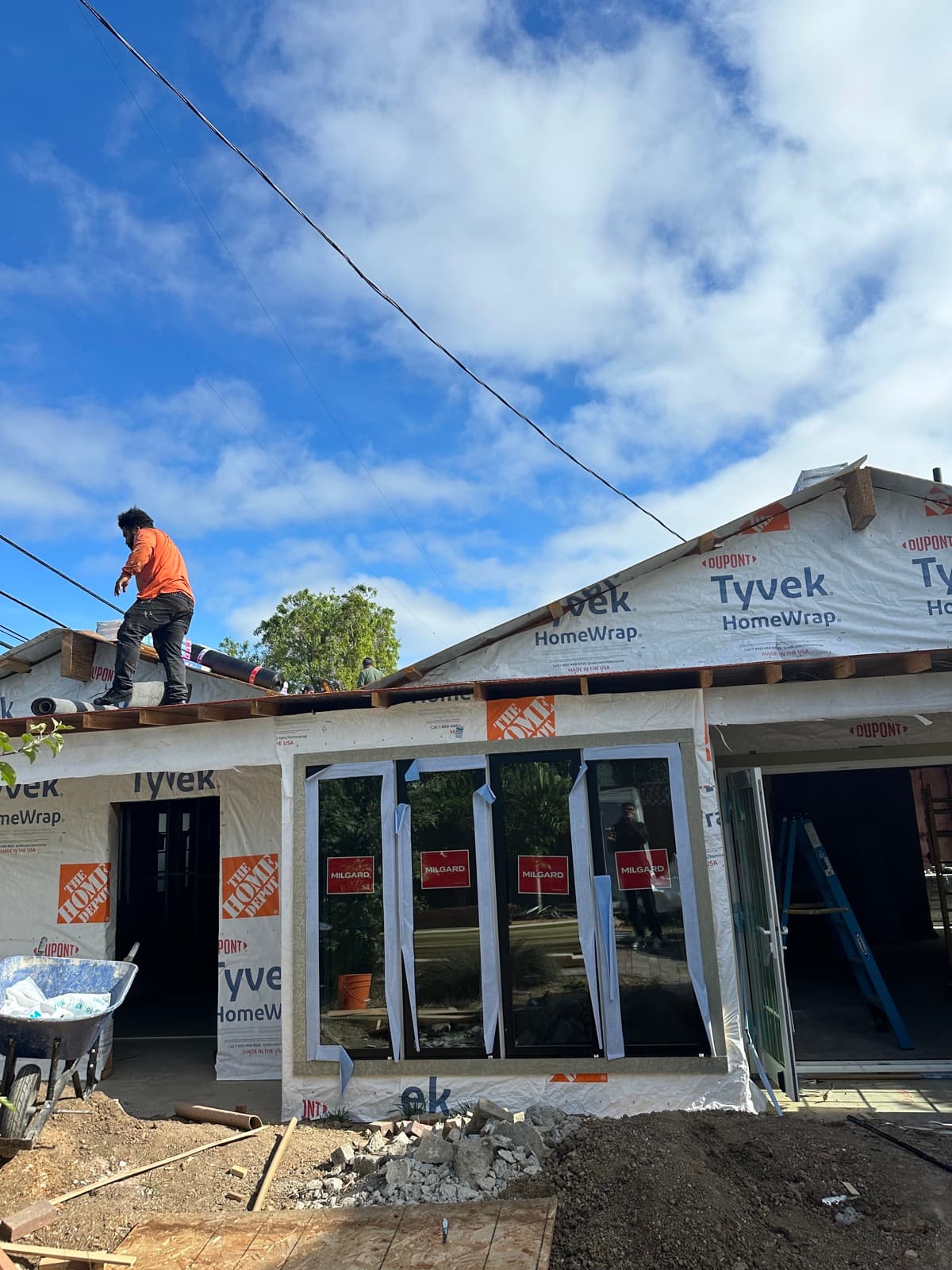
The first week of construction is the most dramatic part of a remodel. Walls come down. Dust fills the air. Your kitchen, bathroom, or the back half of your house stops being a usable room and becomes a construction zone. It's loud and messy. If you've never lived through it, the first morning can be a shock.
Here's what happens day by day, and how a good crew manages the transition.
Day 1 (Monday morning): Setup
Before a single tool hits a wall, the site gets set up. This matters more than most homeowners realize. A clean setup affects how much dust reaches the rest of the house, how fast work moves, and how tired everyone is at the end of week one.
A typical setup includes:
- Floor protection along paths from the entry to the work zone: ram board, adhesive film, or masonite depending on surface
- Plastic zip-wall barriers isolating the work zone from the rest of the house
- Negative air machines (HEPA-filtered exhaust fans) vented to a window or exterior
- A tool staging area, usually a garage corner or driveway
- A port-a-john if the project runs long or the home has only one bathroom
- A dumpster delivered and positioned
- The permit posted at the front of the house
Day 1 afternoon to Day 2: Demolition
Homeowners either love this part or find it unsettling. Cabinets come out, tile gets broken up, drywall comes down, fixtures are disconnected. For a kitchen or full bath, demolition wraps up in the early days. For a full home renovation or addition, it stretches out longer.
Expect:
- Loud impact tools and saws for most of the workday
- Dust. Even with proper containment, some escapes. The whole house feels gritty for the first few days
- Heavy hauling as debris goes out to the dumpster in wheelbarrows, buckets, or on dollies
- A crew moving fast to keep the demo phase short
Day 2–3: The first surprises
Once walls and cabinets are open, what's behind them becomes visible. This is where we find things no one could see during the bid, and where you see how a well-run project handles the unknown.
Common discoveries in Bay Area homes built between 1945 and 1985:
- Galvanized plumbing that needs to be replaced while we're in there
- Knob-and-tube wiring in older homes, or aluminum wiring in certain 1970s builds
- Dry rot, usually at the corners of exterior walls near windows
- Inadequate framing: joists or studs that don't meet current code
- Asbestos in old floor tiles or mastic, which requires certified abatement
- Gas lines running through walls we'd planned to remove
- Structural walls that weren't on the original plans
None of these are catastrophes. All of them affect cost and timeline. We tell you about surprises right away, explain what we found, lay out the options, and say what each one means for the project. We agree on the path forward before moving on.
Day 3–5: Rough-in begins
By mid-week, demolition wraps and rough-in starts. Plumbing, electrical, and HVAC get moved to their new positions before the walls close up again.
The work gets quieter. You'll hear drills and occasional saws, not the constant impact of demo. Most of the dust is behind you until drywall.
What you'll experience as a homeowner
Noise
Loudest during demo. Quieter in rough-in. Picks up again during tile cutting. If you work from home, plan to relocate for at least the demo days. A coffee shop, a library, or a friend's place works.
Dust
With plastic barriers and negative air, most dust stays in the work zone. Some always gets out. Expect to wipe horizontal surfaces in nearby rooms during the dustiest stretches. Close HVAC vents in the work zone and consider higher-MERV filters for the duration.
Access
For a kitchen remodel, set up your temporary kitchen by day one. A microwave, a mini-fridge, a toaster oven, a hotplate, and bottled water go a long way. Many clients set this up in a garage, laundry room, or dining room.
Regular check-ins
Frequent check-ins with the project lead cover what happened, what's coming up, and any decisions needed. This is where questions get asked and small adjustments get made before they turn into big ones.
Common first-week emotions
Almost every homeowner feels something like this in the first 48 hours:
- Day 1 morning: excitement
- Day 1 evening: mild panic. "What have we done?"
- Day 2: overwhelmed by the dust and mess
- Day 3: the first recognizable shape of the new layout
- Day 5: acceptance and routine
This is normal. It gets better fast. The low point is real but short.
What to set up on day one
- A temporary kitchen (if applicable), fully stocked
- A rolling cart or bin to keep essential items mobile
- A spot for mail and deliveries, since the front porch is getting busy
- A pet plan: gates, safe rooms, or daycare on demo days
- A written list of questions or decisions for the morning check-ins
The takeaway
The first week is the steepest part of the curve. It's also where a good crew earns its reputation. Protection, communication, and handling surprises separate a smooth remodel from a painful one. After week one, the rhythm settles. You get used to the schedule, the dust, and the daily updates, and the project starts feeling like progress instead of disruption.
If you're getting ready for a remodel and want to know what the first week will feel like in your home, whether there are access constraints, how we'd set up the barrier, and where the temporary kitchen would go, we can walk through it all at the free consultation.
Free download
Planning a remodel? Get the free checklist.
The steps worth sorting out before you call a contractor — so your project starts smooth. We'll email you The Bay Area Remodel Planning Checklist.
By submitting, you'll get the checklist plus occasional remodel tips. Unsubscribe anytime.
Related Articles

What to Expect at Your Free Consultation
A walk-through of the first visit: what we cover, what to have ready, and what you'll leave with.
Read more
From Vision to Blueprint: The Design Phase Explained
Design is where a remodel is won or lost. Here's how plans come together, how decisions get made, and why this phase matters more than demo day.
Read more
Permits, Plans & Approvals: What Happens Behind the Scenes
Permitting confuses most homeowners. Here's how it works in the Bay Area, city by city, and why timelines are what they are.
Read moreThinking about your own project?
We offer free consultations across San Francisco, the Peninsula, and the South Bay. Tell us what you're picturing and we'll map out what it would take.
Get Your Free Estimate(800) 950-3984