
Stock vs Semi-Custom vs Custom Cabinets: Which Is Right for You?
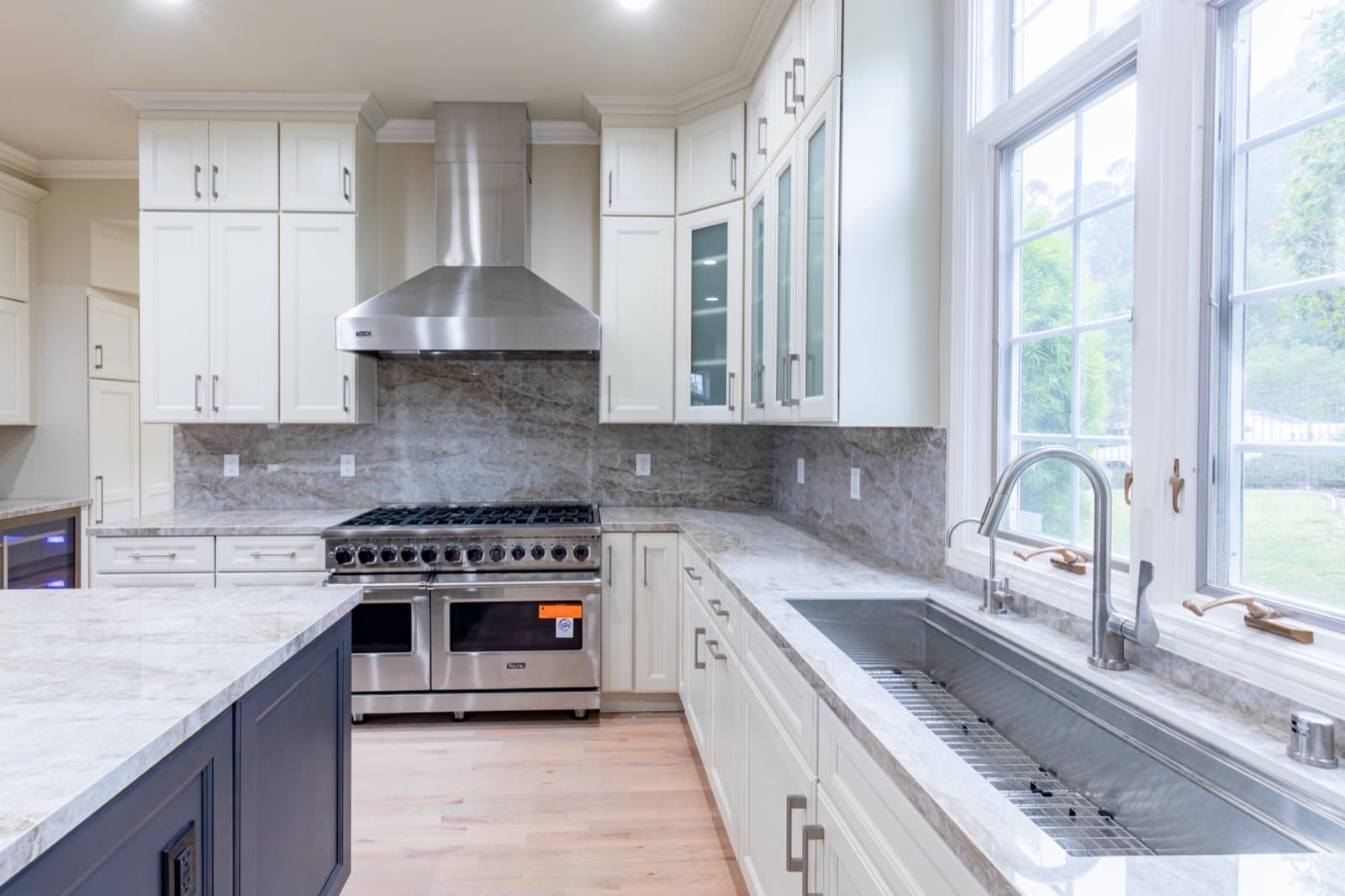
Cabinets are usually one of the largest line items in a kitchen remodel. They also shape every other decision. The cabinet layout sets where plumbing goes, how much counter space you have, whether appliances are integrated, and how the kitchen looks at a glance.
There are three tiers: stock, semi-custom, and custom. Each fits certain situations and each has real limits. Here's how to think about the choice.
Stock cabinets
Stock cabinets are pre-built, mass-produced, and sold in standard sizes, usually 3-inch increments. They come from big-box stores like Home Depot and Lowe's or manufacturer lines like KraftMaid Essentials and Diamond NOW. What you see is what you get: finish, door style, and dimensions are all fixed.
Cost
The lowest-cost tier. A kitchen install fits a modest budget, which makes stock the right fit when other priorities like appliances, counters, and tile take precedence.
Timeline
Available immediately or within 2–3 weeks. This is the fastest path to new cabinets.
Quality
Varies widely. Entry-level stock cabinets use particle board boxes, thermofoil fronts, and mechanical soft-close that feels loose. Higher-end stock lines like KraftMaid and Mid-Continent use plywood boxes and real wood fronts. The range within stock is huge.
When stock makes sense
- Rental property remodels
- Flip projects where ROI matters more than longevity
- Tight-budget primary residences where other priorities like appliances and counters take precedence
- A garage, basement, or secondary kitchen
- A fully standard layout, where 3-ft sections with standard fillers work
When stock doesn't
- A primary kitchen you'll live with 15+ years
- Kitchens with awkward dimensions or tight spots that need non-standard sizing
- Design-forward kitchens where door style, finish nuance, or specialty inserts matter
- High-end homes where cabinet quality will be noticed at resale
Semi-custom cabinets
Semi-custom cabinets are made to order from standard box sizes with much more flexibility. You choose the door style from a catalog, pick from 20+ finishes, add specialty inserts like pull-outs, tray dividers, and spice racks, and often get quarter-inch sizing increments. Most kitchens we do fall into this tier.
Cost
Mid-range. More than stock, well below custom. At this tier the cabinet budget is a significant line item and sets the quality tone for the project.
Timeline
6 to 12 weeks from order to delivery. This usually overlaps with demo and rough-in, so it doesn't extend the overall project timeline.
Quality
Much better than stock. Plywood boxes are standard, not particle board. Door construction is solid wood or quality MDF. Soft-close hardware is usually Blum or Grass. Paint or stain finish is consistent across the kitchen. Most semi-custom lines come with lifetime limited warranties.
Popular semi-custom brands here: Woodharbor, Crystal, Wellborn Forest, Dura Supreme, and Medallion. Each has its own style range.
When semi-custom makes sense
- Most mid-range and above kitchen remodels
- Primary residences where you plan to stay 7+ years
- Kitchens that need some adjustment: a narrow filler, a specific height, one odd-sized cabinet
- Clients who want design flexibility but don't need fully bespoke
- Bathrooms. Semi-custom vanities are very common
When semi-custom doesn't
- Layouts with many non-standard dimensions that don't fit semi-custom sizing
- A specific wood species or finish that isn't in any semi-custom line
- Very high-end homes where the client wants specialty details: inlays, custom profiles, concealed dovetail joinery visible only from the inside
Custom cabinets
Custom cabinets are built to any dimension, in any material, with any finish, by a local or regional millworker. Every box, drawer, and piece of trim is made for your kitchen. This is where cabinets become craftsmanship.
Cost
The highest-cost tier, often the dominant line item in a high-end kitchen. Discuss budget directly with the millworker and your contractor once layout and scope are defined.
Timeline
10 to 18 weeks from final design signoff to delivery. This usually aligns with permit and construction timelines. Plan ahead. Custom cabinets don't wait for last-minute changes.
Quality
Best in class when done by a reputable shop. Dovetailed drawer boxes, solid hardwood or furniture-grade plywood cases, hand-applied finishes, dovetailed back joints, and cabinetry-grade hinges and slides. A good custom cabinet is a piece of furniture. A great one outlasts the house.
When custom makes sense
- High-end homes where the kitchen is a showcase
- Estate remodels in Hillsborough, Atherton, and Portola Valley
- Unusual kitchen geometries: curves, angles, vaulted ceilings
- Historic homes where existing millwork needs to be matched
- Clients who value craftsmanship and will notice it every day
When custom doesn't
- Standard rectangular kitchens where semi-custom does the same job for meaningfully less
- Tight budgets where the money is better spent on counters, appliances, or flooring
- Time-sensitive projects. Custom lead times are real
The differences that matter most
Box construction
- Stock: often particle board. Check specs carefully
- Semi-custom: plywood standard
- Custom: furniture-grade plywood or solid hardwood
Drawer construction
- Stock: stapled or nailed sides, thermofoil interiors
- Semi-custom: dovetailed solid wood
- Custom: dovetailed solid hardwood, often stained to match the interior
Hardware
- Stock: generic soft-close, sometimes noisy
- Semi-custom: Blum or Grass, industry-standard, smooth operation
- Custom: Blum Legrabox, Salice, or Hafele premium, silent and smooth
Finish consistency
- Stock: paint and stain quality varies, with visible lot-to-lot differences
- Semi-custom: consistent within a kitchen, factory-applied finishes
- Custom: hand-applied, often multi-step finishes with visible depth
Common pitfalls at each tier
Stock pitfalls
- Not budgeting for custom fillers and trim for an imperfect fit. It adds cost at the end
- Choosing a brand without plywood box construction. Particle board swells at the first leak
- Skipping soft-close hardware to save a little money. You'll regret it daily
Semi-custom pitfalls
- Choosing a budget line within a reputable brand and thinking you're getting the top-tier product
- Not verifying door overlay style. Inset, full-overlay, and partial-overlay change the look dramatically
- Assuming every finish is in stock. Specialty stains can add 2 to 4 weeks
Custom pitfalls
- Choosing a low-bid custom shop. If the price matches semi-custom, the quality probably isn't custom-grade
- Making major layout changes after production starts. Expensive and slow
- Not coordinating closely with the installer. Custom cabinets can be harder to install than factory cabinets
How to decide
A reasonable framework:
- For tighter budgets, stock makes sense. Put the saved money into other categories
- For mid-range projects where you plan to stay 7+ years, semi-custom is almost always the right answer
- For high-end homes or generous scopes, custom is likely worth the premium
- If you're unsure, get a semi-custom quote and a custom quote from a reputable source and compare
One caveat worth noting
The word "custom" gets used loosely. Plenty of contractors and cabinet dealers call semi-custom "custom" because it sounds more premium. Before you pay custom prices, verify one thing: are the cabinets built from scratch by a millworker, or assembled from catalog components with custom finishes? Both have their place. They shouldn't be priced the same.
Final thought
Cabinets are the bones of a kitchen. Whatever tier you choose, choose it intentionally, and choose a shop or brand that backs up the product. A good cabinet company replaces a warped door 10 years later. A bad one won't return the call at year two.
If you're mid-plan and deciding which tier fits your project, we can walk through the tradeoffs at the free consultation. We work with semi-custom and custom millworkers and can help you size the decision to your scope and budget.
Free download
Planning a remodel? Get the free checklist.
The steps worth sorting out before you call a contractor — so your project starts smooth. We'll email you The Bay Area Remodel Planning Checklist.
By submitting, you'll get the checklist plus occasional remodel tips. Unsubscribe anytime.
Related Articles
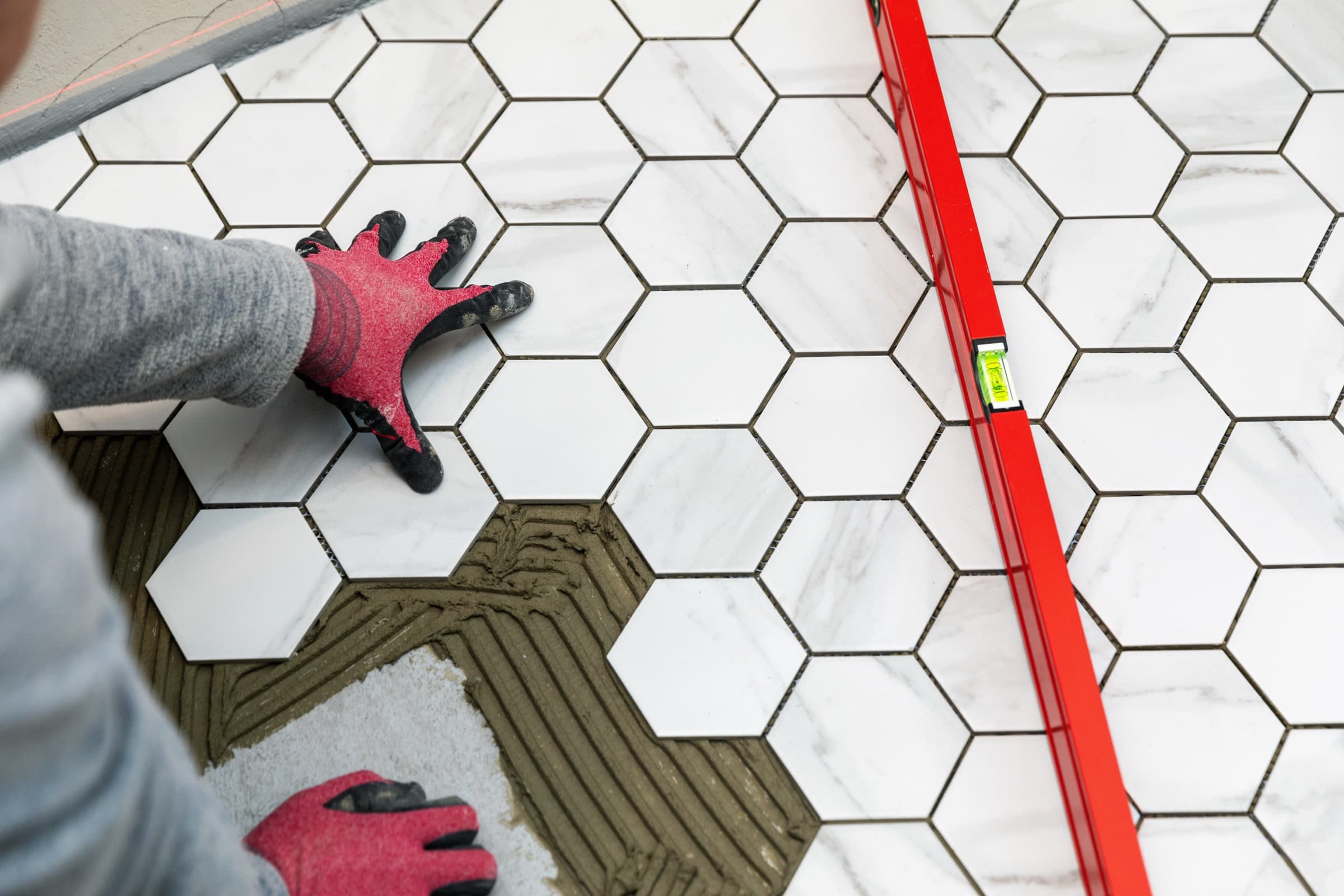
How to Choose Bathroom Tile: A Bay Area Homeowner's Guide
Material, size, finish, and where each one belongs — a straight-talk guide to picking bathroom tile you'll still like in ten years.
Read more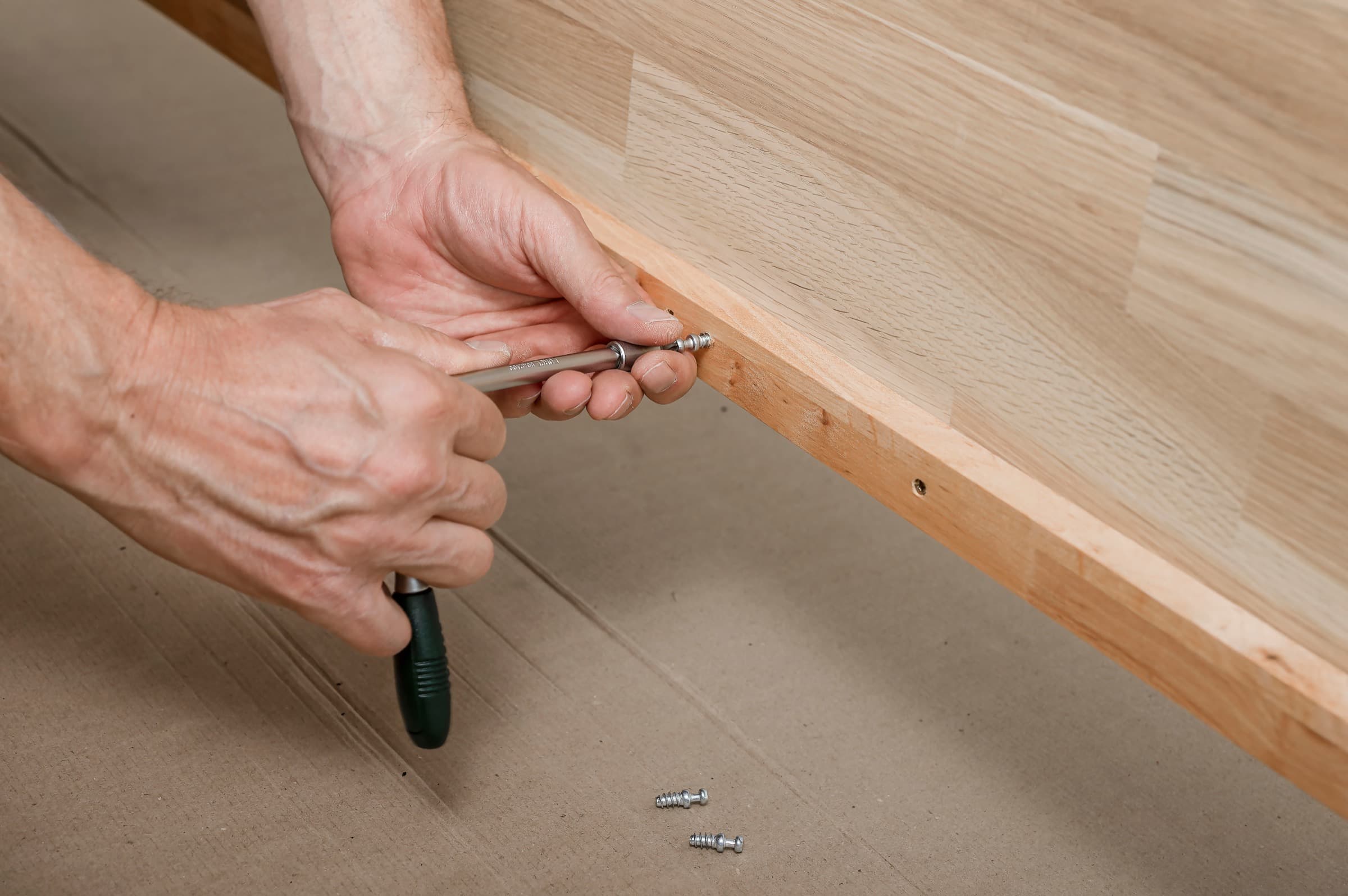
Kitchen Cabinet Styles: Shaker, Flat-Panel, Inset & More
The cabinet door style you pick sets the whole tone of your kitchen. Here's a plain-English guide to the main styles and how they're built.
Read more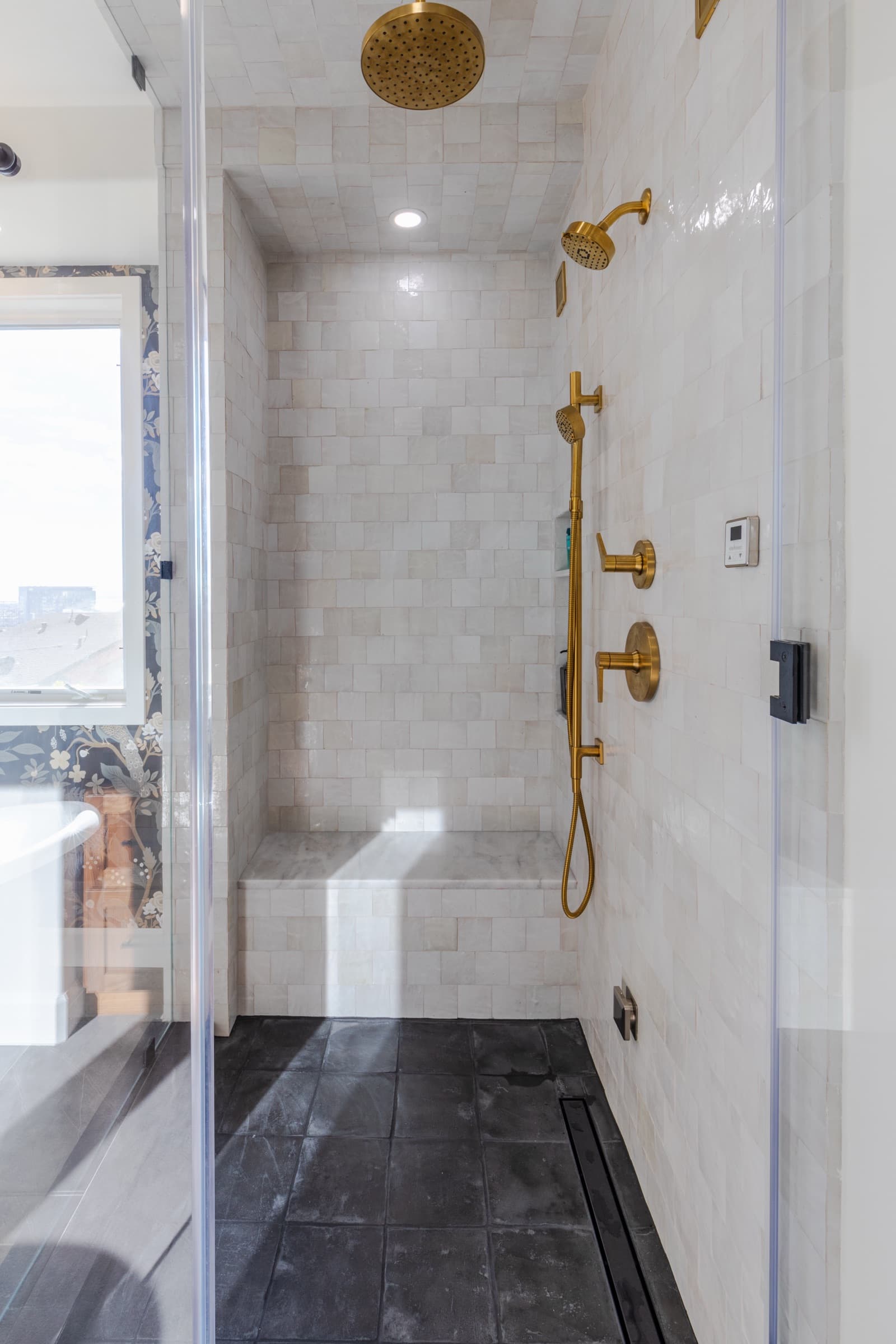
Aging-in-Place Remodeling: Designing a Home That Works Long-Term
A few thoughtful changes let a home support you for the long run. Here's what aging-in-place remodeling looks like, done well.
Read moreThinking about your own project?
We offer free consultations across San Francisco, the Peninsula, and the South Bay. Tell us what you're picturing and we'll map out what it would take.
Get Your Free Estimate(800) 950-3984